Vitamin C is one of the most popular skincare ingredients used worldwide. Known for its powerful antioxidant properties, Vitamin C helps protect the skin from environmental damage while improving overall skin appearance. Whether you want brighter skin, fewer dark spots, or reduced signs of aging, Vitamin C can be a valuable addition to your skincare routine.
What Is Vitamin C?
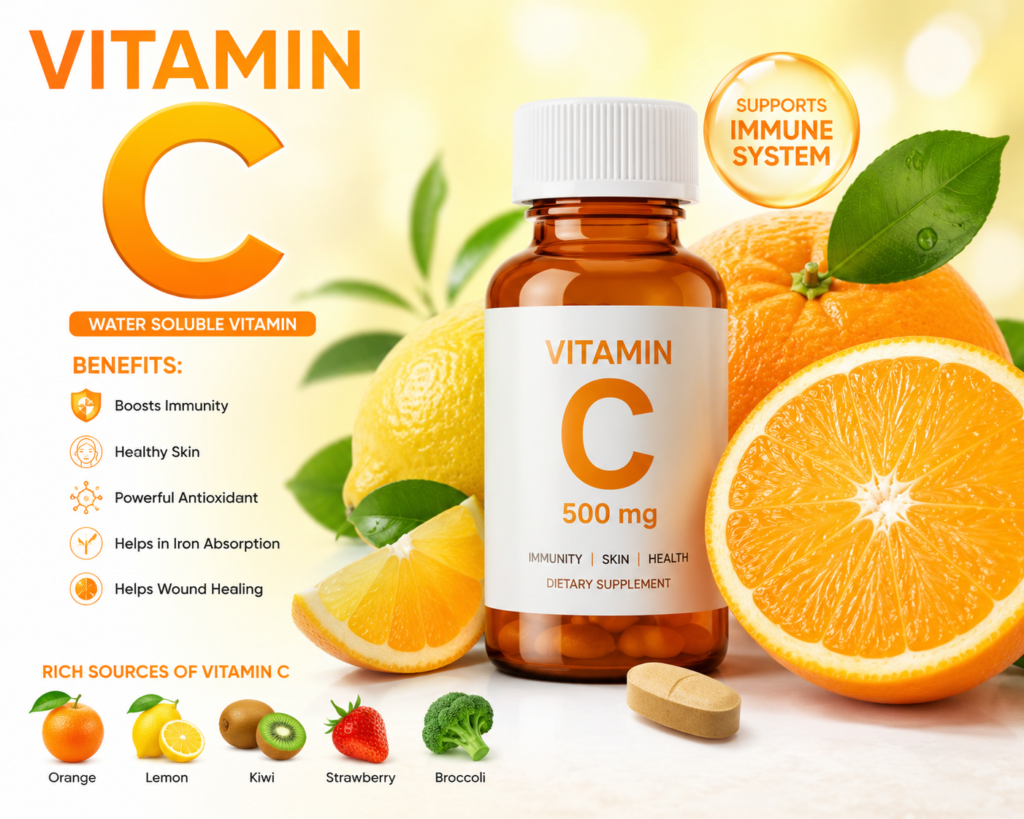
Vitamin C, also known as Ascorbic Acid, is an essential vitamin that helps keep your body healthy. Since the human body cannot produce vitamin C on its own, it must be obtained from food or supplements
Natural Sources of Vitamin C
- 🍊 Orange
- 🍋 Lemon
- 🥝 Kiwifruit
- 🍓 Strawberry
- 🌶️ Bell pepper
- 🥦 Broccoli
- 🍅 Tomato
Top Benefits of Vitamin C for Skin
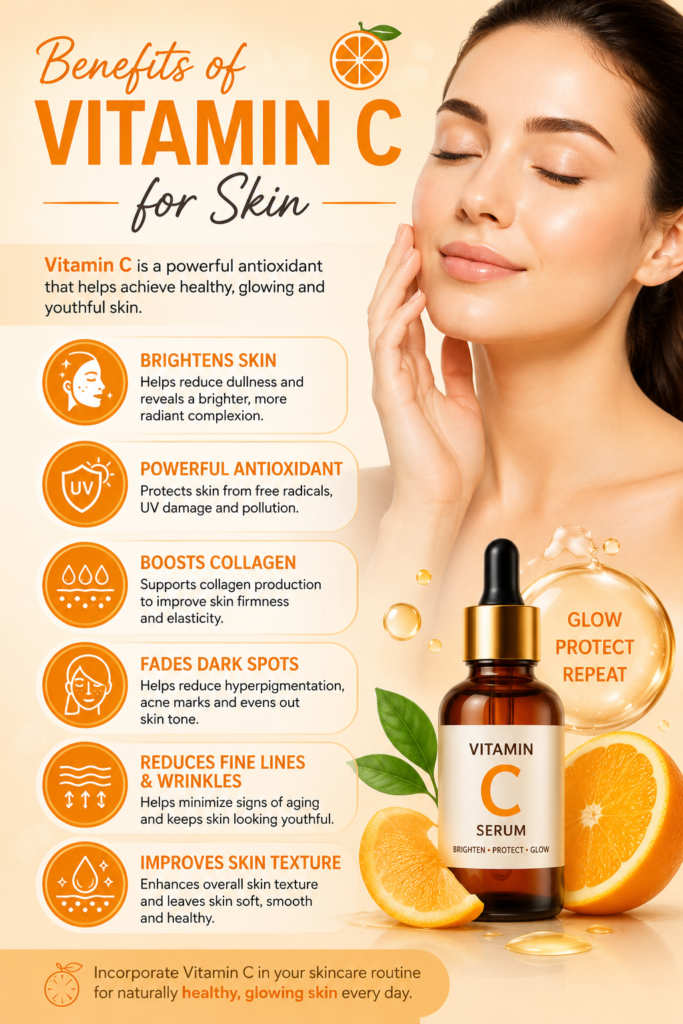
1. Brightens the Skin
Vitamin C helps make the skin look brighter and more radiant. It reduces dullness and gives a natural glow.
2. Reduces Dark Spots
It helps fade acne marks, pigmentation, and dark spots, making the skin tone more even.
3. Boosts Collagen Production
Vitamin C supports collagen production, which keeps the skin firm, smooth, and youthful
4. Protects Against Sun Damage
It works as an antioxidant and helps protect the skin from damage caused by UV rays and pollution
5. Reduces Signs of Aging
Regular use of Vitamin C can reduce fine lines, wrinkles, and other signs of aging.
6. Helps Heal the Skin
Vitamin C supports skin repair and helps wounds, acne marks, and damaged skin heal faster.
7. Skin Hydrated
It helps the skin retain moisture, making it soft, smooth, and healthy.
8. Improves Skin Texture
Vitamin C can make the skin feel smoother and improve overall skin texture.
Who Should Use Vitamin C?
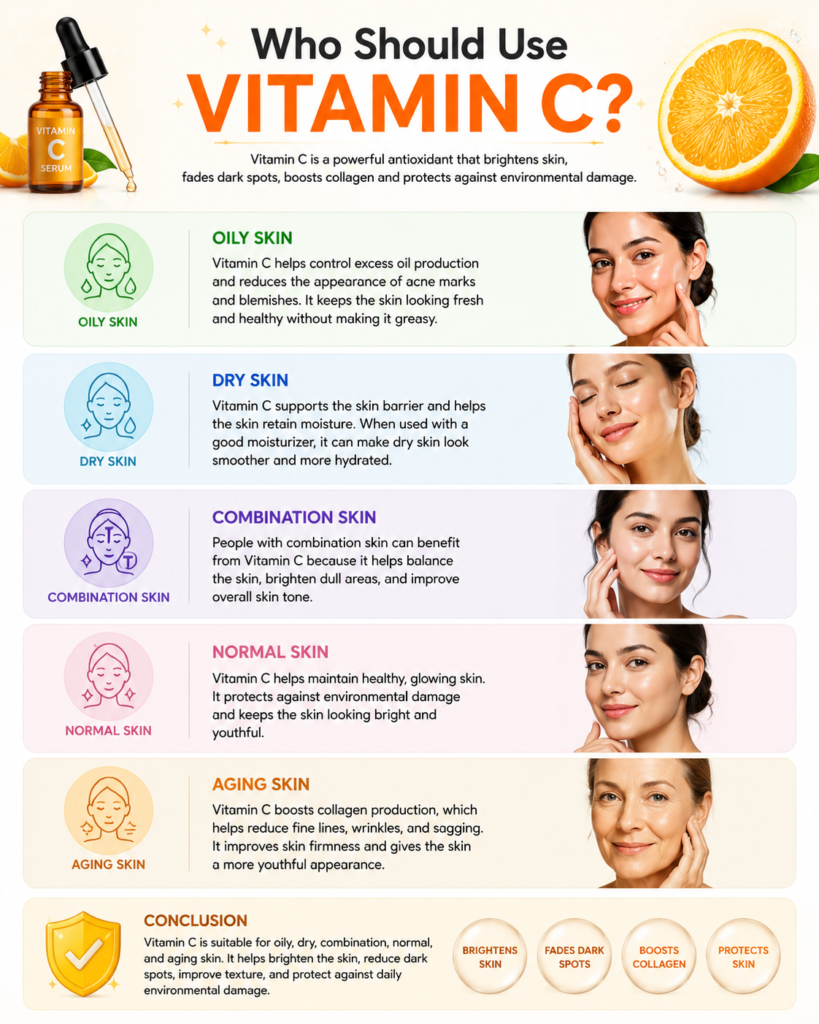
Vitamin C is suitable for most skin types, including:
- Oily Skin
- Dry Skin
- Combination Skin
- Normal Skin
- Aging Skin
People with sensitive skin should start with a lower concentration and gradually increase usage.
How to Use Vitamin C in Your Skincare Routine
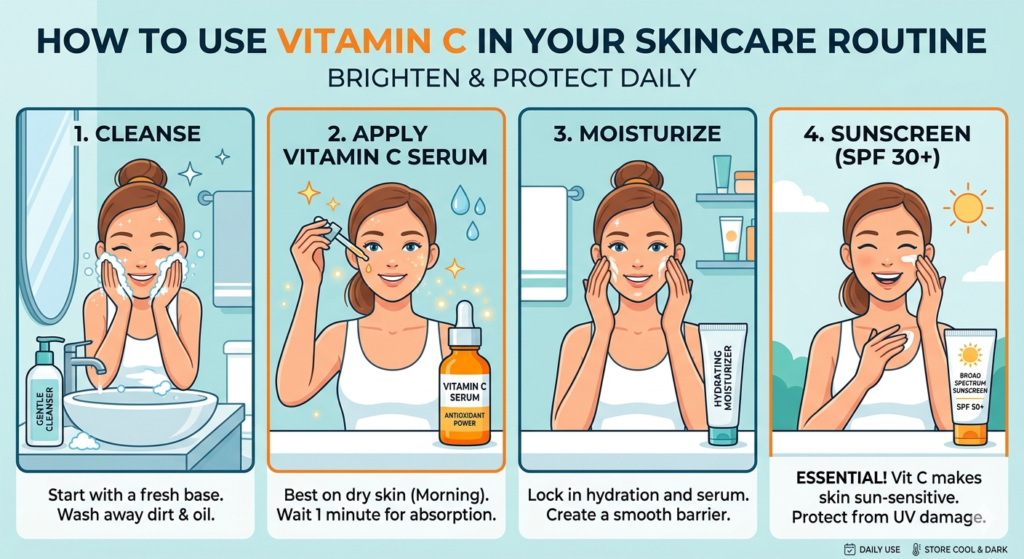
To get the best results, you must apply Vitamin C in the correct order.
1.Cleanse: Step 1.
Wash your face with a gentle cleanser to remove dirt and oil. Pat your skin dry with a clean towel.
2.Apply Vitamin C: Step 2.
Take 3-4 drops of Vitamin C serum. Gently pat (do not rub) it all over your face and neck. Let it absorb for 1 minute.
3.Moisturize: Step 3.
Apply your favorite moisturizer to lock in the serum and keep your skin hydrated.
4.Sunscreen (Most Important): Step 4.
If you are applying it in the morning, always finish with a broad-spectrum sunscreen (SPF 30 or higher)
Which Vitamin C is Best for Your Skin Type?
Not all Vitamin C serums are the same. Look at this simple table to find the best type for your skin:
| Derivative Name | Best For | Power Level | Stability (Does it spoil fast?) |
| L-Ascorbic Acid | Normal / Oily Skin | Highest (Purest Form) | Low (Spoils quickly if exposed to light) |
| Sodium Ascorbyl Phosphate | Acne-Prone Skin | Medium-High | High (Gentle and safe for acne) |
| Tetrahexyldecyl Ascorbate | Dry / Sensitive Skin | High | Very High (Deeply hydrating) |
Common Mistakes to Avoid While Using Vitamin C for Skin
1. Mixing It with Retinol or Face Acids
Do not use Vitamin C together with strong skincare ingredients like Retinol or Salicylic Acid at the same time. This can make your skin red, dry, or irritated.
The Right Way:
Use Vitamin C in the morning and use Retinol or face acids at night.
2. Putting It on Wet Skin
Applying Vitamin C on wet or damp skin can make it absorb too quickly. This may cause a burning or stinging feeling.
The Right Way:
Wash your face and dry it completely before applying Vitamin C serum.
3. Forgetting Sunscreen
Vitamin C helps protect your skin, but it cannot fully protect you from the sun. Without sunscreen, your skin can still get damaged by UV rays.
The Right Way:
Always apply sunscreen with SPF 30 or higher after your moisturizer when using Vitamin C during the day
4. Starting with a Strong Serum
Many beginners choose a high-strength Vitamin C serum, thinking it will work faster. However, a strong serum can irritate the skin and cause breakouts.
The Right Way:
Start with a 10% Vitamin C serum. Once your skin gets used to it, you can try a stronger concentration.
5. Using a Spoiled (Oxidized) Serum
Vitamin C can lose its effectiveness when exposed to air and sunlight. A spoiled serum may not work properly and can irritate your skin.
The Right Way:
Check the color of your serum regularly. If it turns dark yellow, orange, or brown, stop using it and replace it with a fresh bottle.
Tips for Choosing a Vitamin C Product
Choosing the right Vitamin C product can help you get better results for your skin. Here are some simple tips.
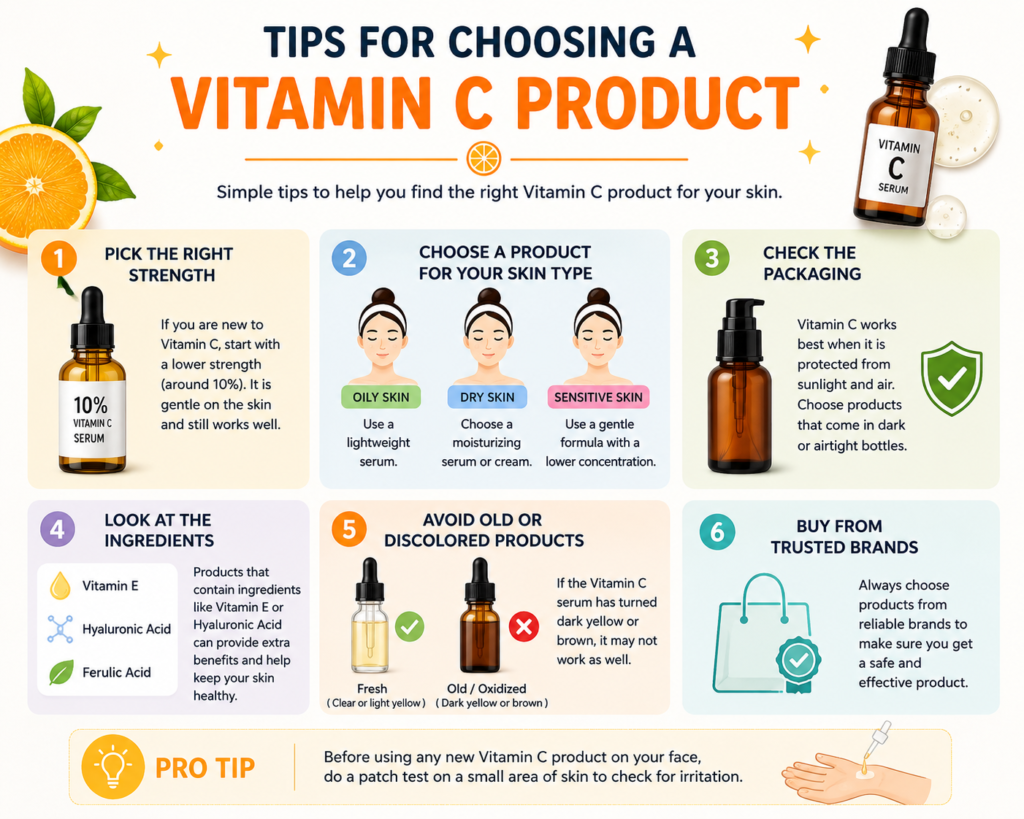
1. Pick the Right Strength
If you are new to Vitamin C, start with a lower strength (around 10%). It is gentle on the skin and still works well.
2. Choose a Product for Your Skin Type
- Oily Skin: Use a lightweight serum.
- Dry Skin: Choose a moisturizing serum or cream.
- Sensitive Skin: Use a gentle formula with a lower concentration.
3. Check the Packaging
Vitamin C works best when it is protected from sunlight and air. Choose products that come in dark or airtight bottles.
4. Look at the Ingredients
Products that contain ingredients like Vitamin E or Hyaluronic Acid can provide extra benefits and help keep your skin healthy.
5. Avoid Old or Discolored Products
If the Vitamin C serum has turned dark yellow or brown, it may not work as well. Fresh products are usually clear or light yellow.
6. Buy from Trusted Brands
Always choose products from reliable brands to make sure you get a safe and effective product.
Pro Tip: Before using any new Vitamin C product on your face, do a patch test on a small area of skin to check for irritation