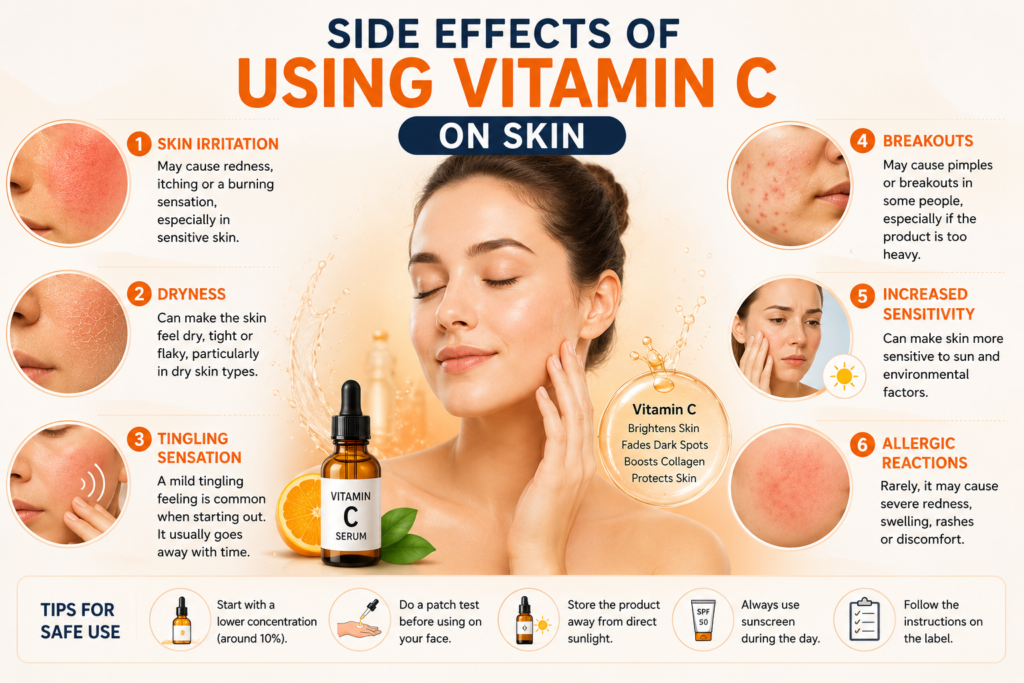
Vitamin C is generally safe for most people, but some users may experience mild side effects, especially when using it for the first time or in high concentrations.
Vitamin C is one of the most popular skincare ingredients because it helps brighten the skin, reduce dark spots, and protect against environmental damage. However, like any skincare product, it may cause side effects in some people, especially if it is used incorrectly or in high concentrations.
In this article, we will discuss the common side effects of using Vitamin C on the skin and how to avoid them.
1. Skin Irritation
One of the most common side effects of Vitamin C is skin irritation. Some users may experience redness, itching, or a mild burning sensation after applying a Vitamin C serum.
This usually happens when the product contains a high concentration of Vitamin C or when the skin is sensitive.
How to Avoid It
Start with a lower-strength Vitamin C product and gradually increase usage as your skin adjusts.
2. Dryness
Vitamin C can sometimes make the skin feel dry, tight, or flaky. This is more common in people who already have dry or sensitive skin.
How to Avoid It
Use a good moisturizer after applying Vitamin C serum to keep your skin hydrated and comfortable.
3. Tingling Sensation
A slight tingling feeling is normal when you first start using Vitamin C products. In most cases, this sensation disappears after a few uses as the skin becomes accustomed to the ingredient.
How to Avoid It
Apply a small amount of product and use it every other day when starting out.
4. Breakouts
Some people may notice pimples or acne breakouts after using Vitamin C products. This can happen if the formula is too heavy for their skin type or if their skin reacts to certain ingredients in the product.
How to Avoid It
Choose a lightweight, non-comedogenic Vitamin C serum that is suitable for acne-prone skin.
5. Increased Skin Sensitivity
Strong Vitamin C products can make the skin more sensitive to sunlight and environmental factors. Without proper protection, the skin may become irritated more easily.
How to Avoid It
Always apply sunscreen during the day when using Vitamin C products.
6. Allergic Reactions
Although rare, some individuals may experience allergic reactions such as severe redness, swelling, rashes, or discomfort.
How to Avoid It
Perform a patch test before using any new Vitamin C product on your face. If irritation occurs, stop using the product and consult a dermatologist.


Tips for Safe Use of Vitamin C
- Start with a lower concentration (around 10%).
- Perform a patch test before first use.
- Store the product away from direct sunlight.
- Use sunscreen every day.
- Follow the instructions provided on the product label.
Side Effects of Using Vitamin C on Skin
Vitamin C is generally safe for most people, but some users may experience mild side effects, especially when using it for the first time or
Benefits of Vitamin C for Skin: Complete Guide to Brighter and Healthier Skin
Table of Contents Vitamin C is one of the most popular skincare ingredients used worldwide. Known for its powerful antioxidant properties, Vitamin C helps

WHAT IS GOOGLE MY BUSINESS (GMB)? COMPLETE BEGINNER’S GUIDE FOR SMALL BUSINESSES IN INDIA
Are you a small business owner in India struggling to get new customers online? This guide on Google My Business India is written specifically for

Skin Care for healthy skin
Introduction Healthy skin is a sign of good overall health and proper self-care. Our skin protects the body from harmful environmental factors such as pollution,
What is SEO? A Beginner’s Guide: How to Rank a Website on Google
Table of Contents Ranking a website on Google is one of the most important goals of digital marketing and Search Engine Optimization (SEO). A higher